
Learning to Read a Place: Discovering Kempton Nature Reserve
Some wildlife locations introduce themselves politely.
Kempton Nature Reserve does not.
It greets you with a map the size of a small war strategy briefing, quietly suggesting that if you plan to understand this place properly, you might want to start taking notes.
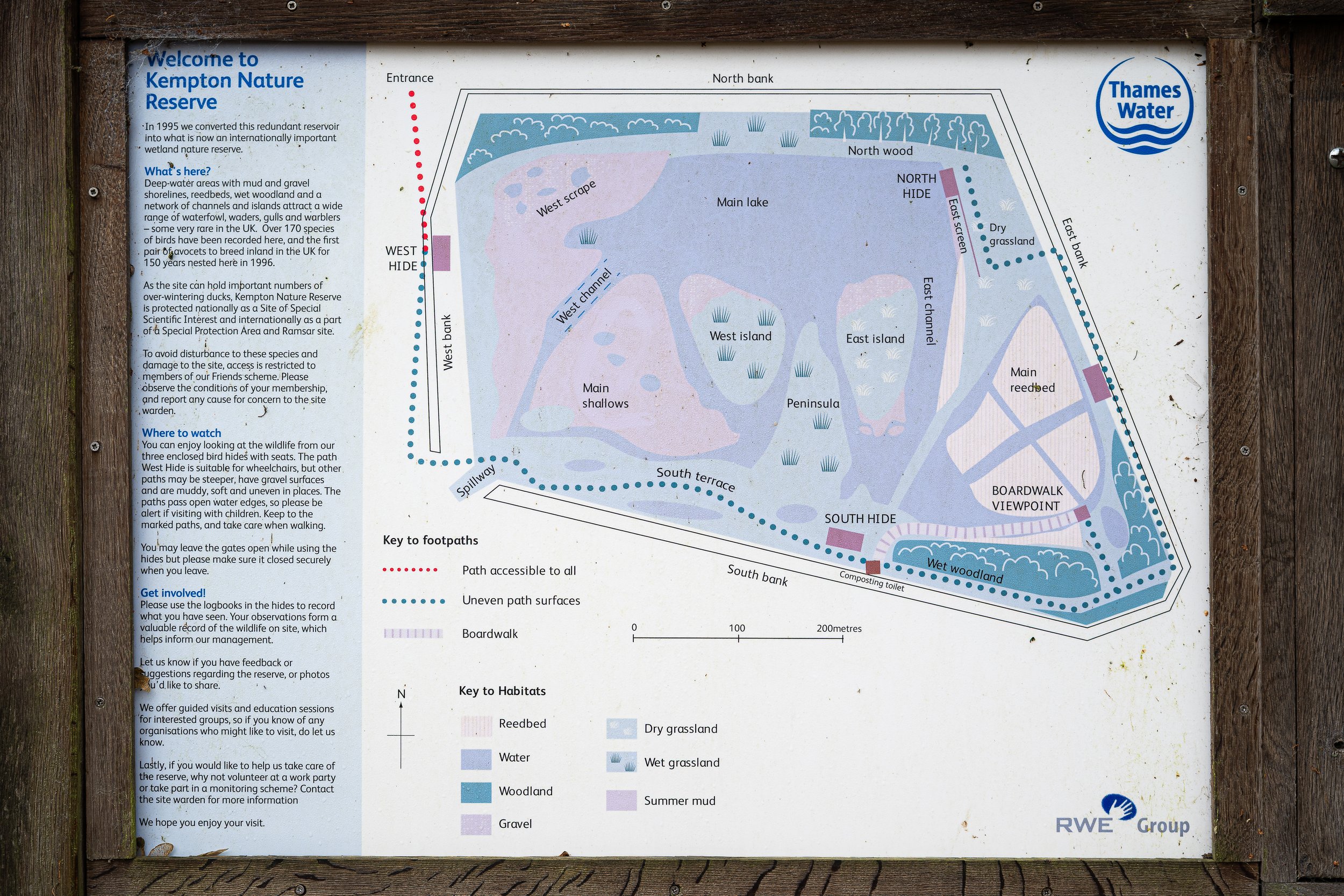
Now, in theory, maps are very helpful things. In practice, wildlife photographers rarely read them. Most of us approach reserves with the tactical planning ability of a golden retriever chasing a tennis ball. We arrive. We see water. We see birds.
We raise a camera the size of a medium anti-aircraft installation and begin photographing whatever moves. Which is, I must admit, an extremely enjoyable way to spend a morning. But it’s not the way you learn a place.
And learning a place — properly learning it — is where wildlife photography becomes something far more interesting than a sequence of lucky encounters. Kempton, as it turns out, is an excellent teacher of this lesson.
The Entrance: The Slow Beginning
The path into Kempton doesn’t rush you. It winds quietly through tall reeds, narrowing your view of the world until the landscape feels almost like a corridor. This is a good sign. Places that hide their horizons usually have something interesting waiting at the other end.
The boardwalk creaks slightly underfoot — the sort of creak that reminds you you’re standing on something built by humans inside a place that absolutely does not care about human schedules. The reeds rise on both sides like golden walls. And if you’re quiet — really quiet — you begin hearing things. A faint rustle. A distant splash. Something small moving through dry stems.
This is where many photographers make their first mistake. They keep walking. They hurry to the hides, convinced that the real wildlife begins where the benches are. But the truth is that the most important moment of a visit to a reserve often happens before you reach the hide at all. It happens when you slow down. And start noticing the place itself.
The Hide: A Theatre of Patience
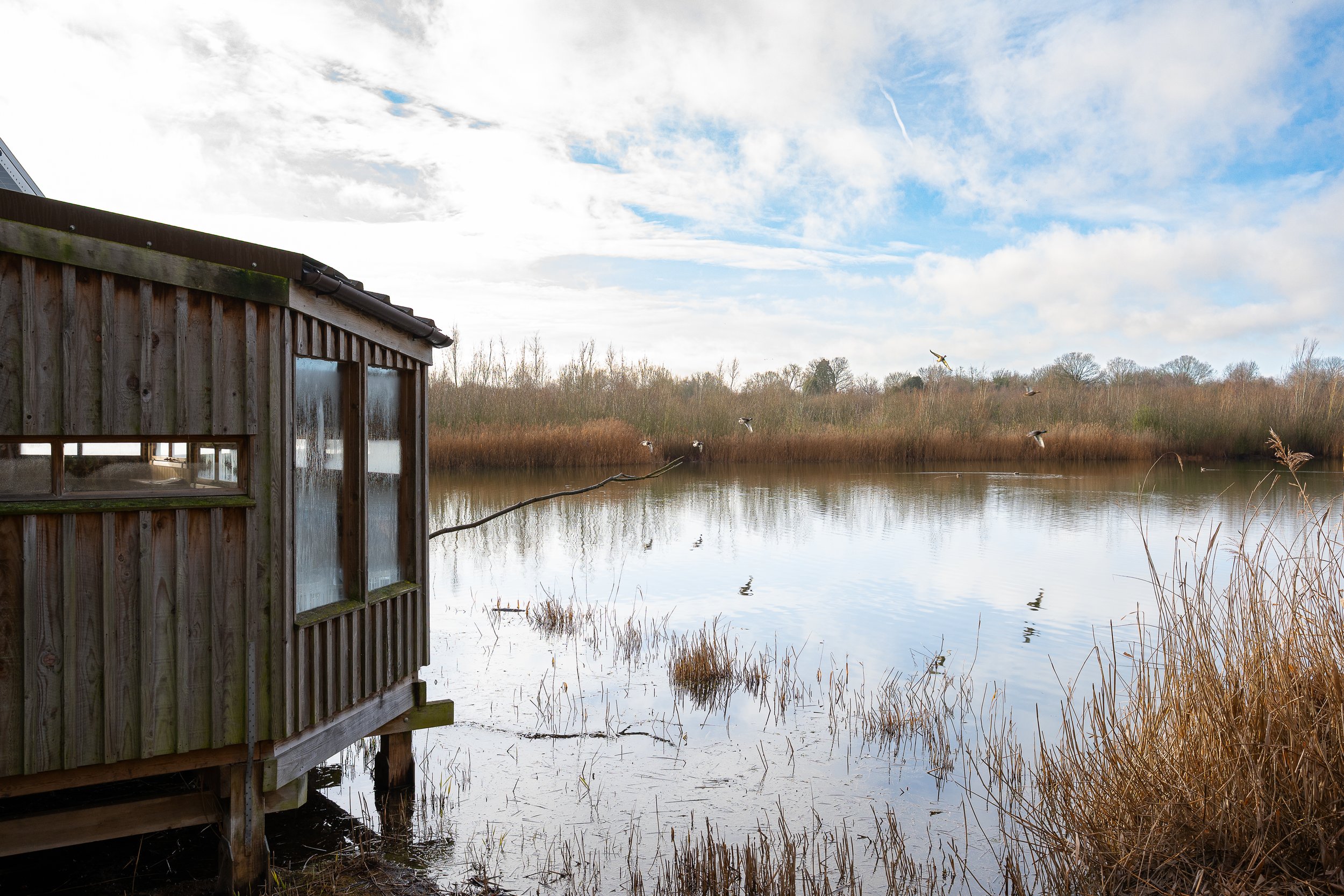
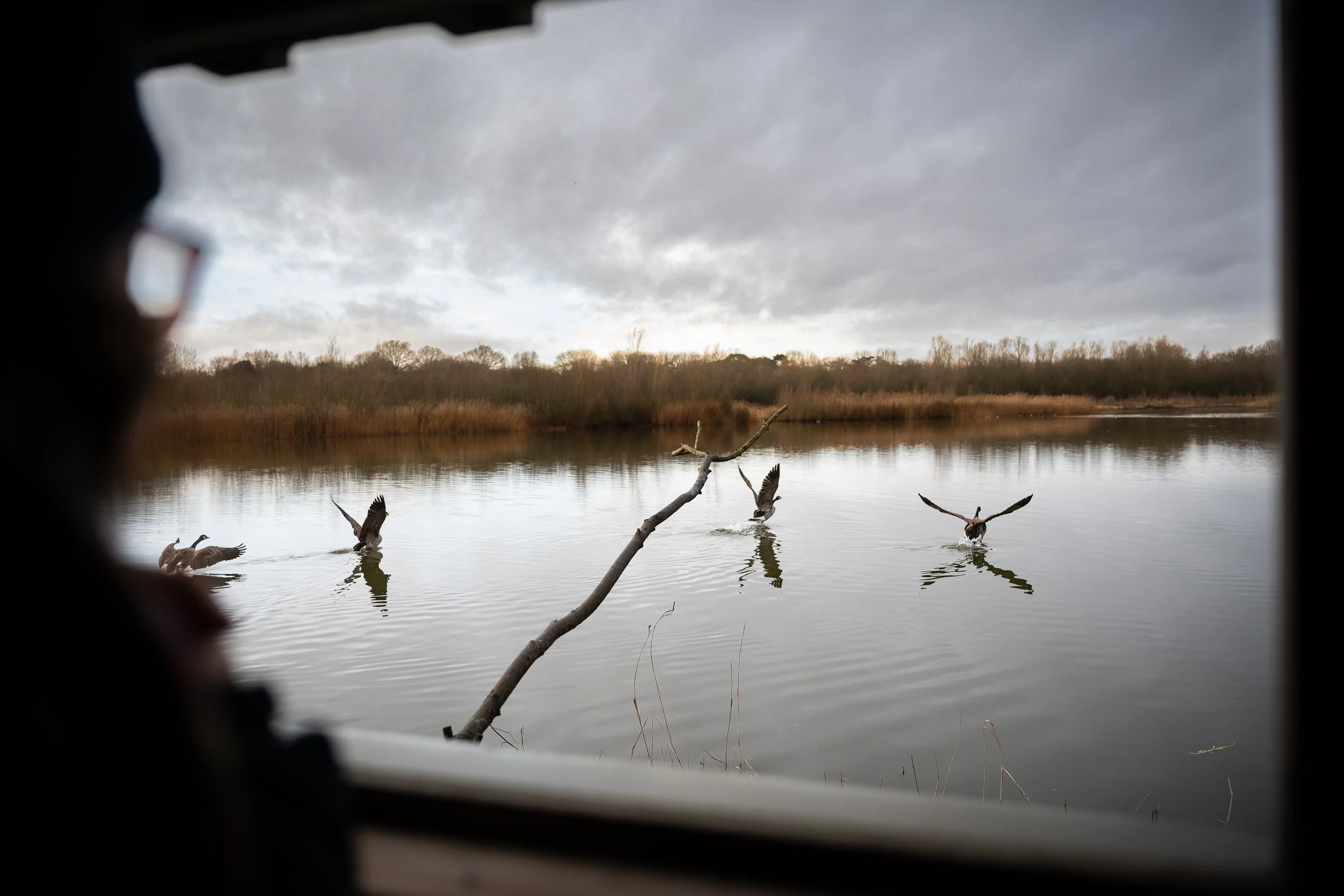
Eventually the reeds part and the landscape opens into one of Kempton’s reservoirs. And there, tucked neatly along the water’s edge, is the hide. If you’ve never sat in a bird hide before, the experience is wonderfully peculiar. You enter quietly. You sit. And you stare through a narrow window into a wide world.
The outside landscape continues as usual. Birds fly. Water ripples. Clouds drift across the sky with an air of complete indifference to your photographic ambitions. Inside the hide, however, something subtle happens. Your pace slows. Your breathing slows. And gradually the reserve begins revealing small details that were invisible just minutes before.
Someone’s binoculars click softly. A thermos lid turns with the seriousness of a submarine hatch. A photographer two seats away whispers the name of a bird in the tone usually reserved for archaeological discoveries. And then the stage begins to move.
The Sky Highways
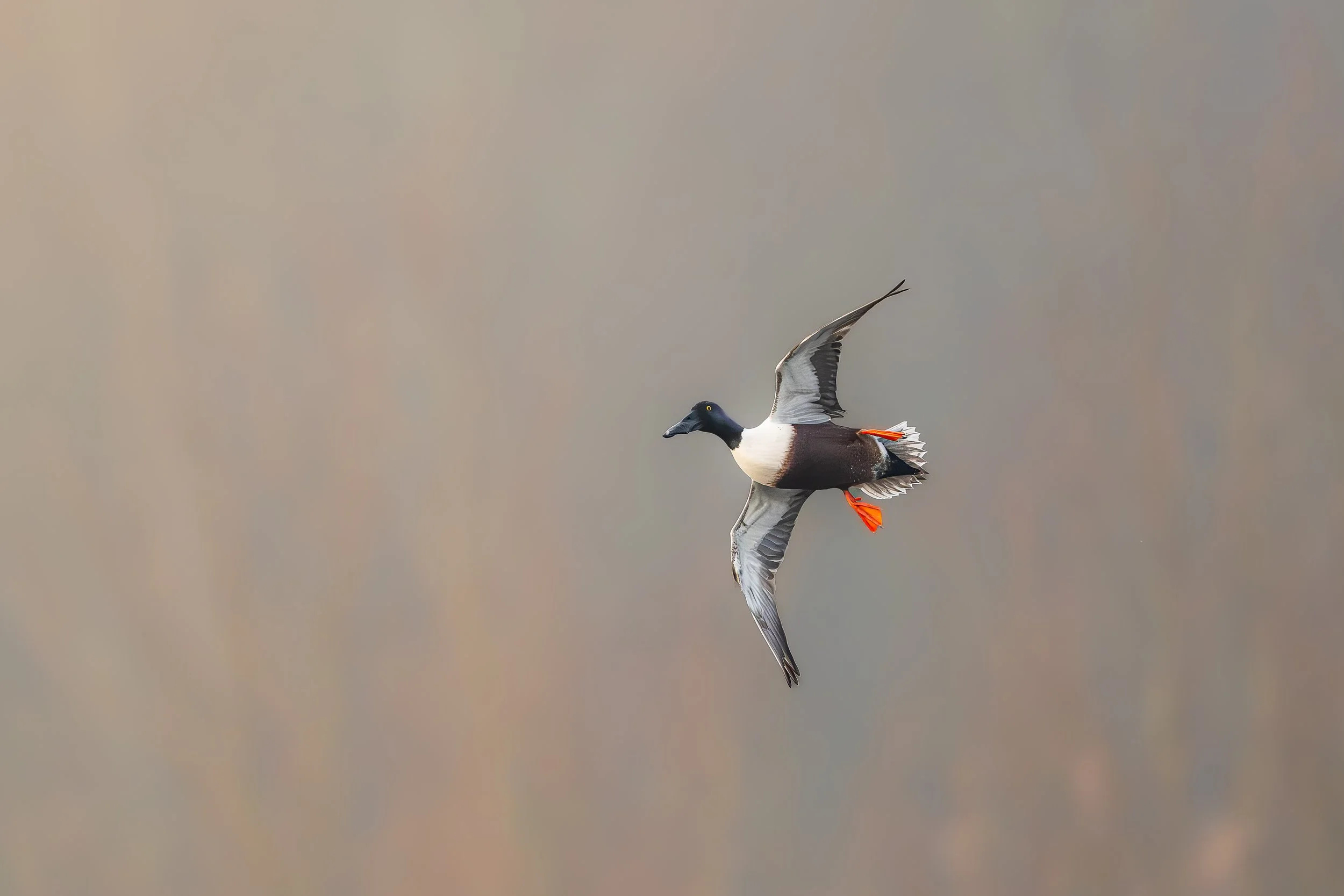
The first pattern I noticed at Kempton wasn’t on the water. It was above it. Birds cross the reservoirs constantly. Not in dramatic flocks — Kempton is far too civilised for that sort of spectacle — but in small groups moving with quiet purpose. Ducks skim low over the surface. Pairs pass from one side of the water to the other. And every now and then, something particularly elegant cuts across the sky.
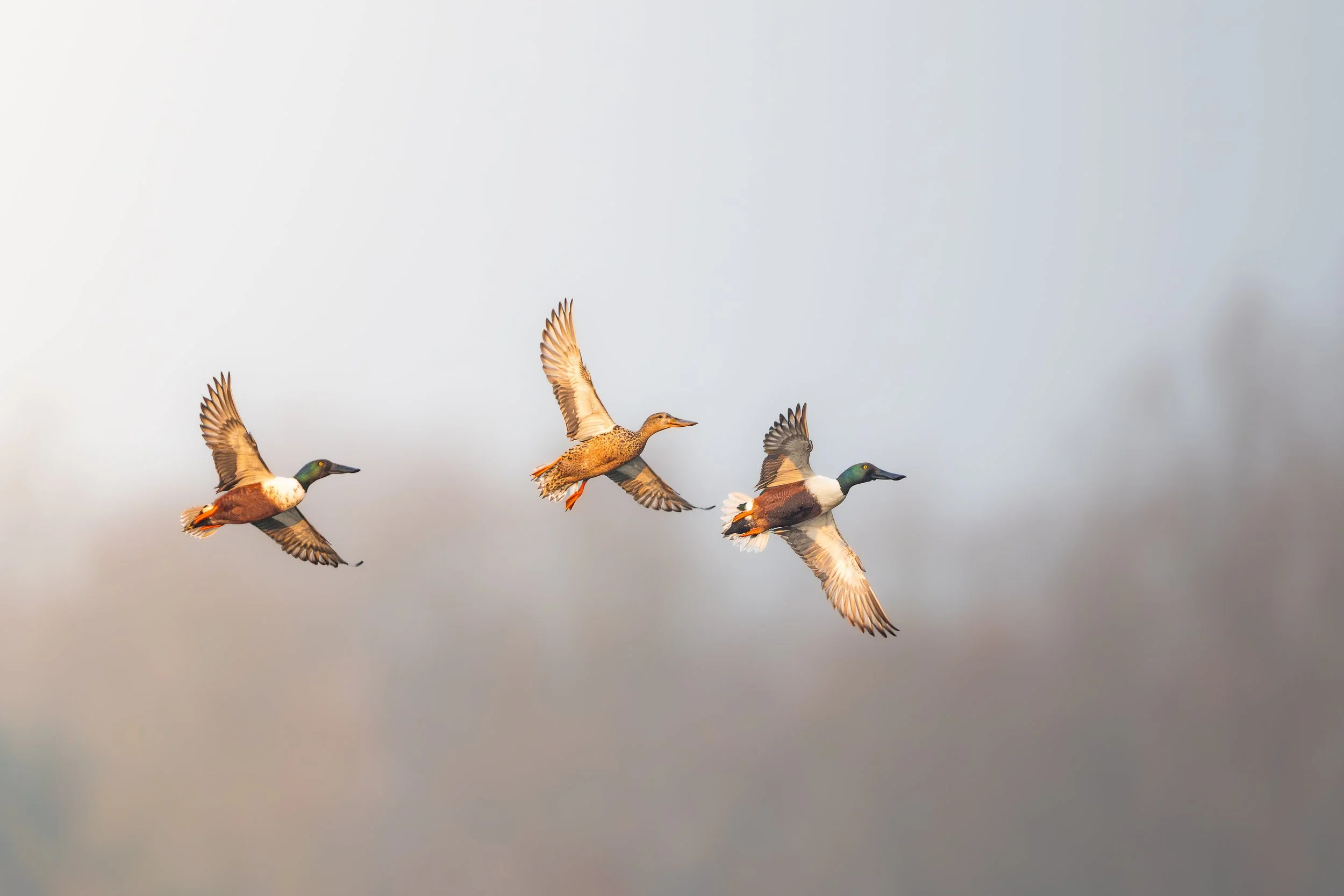
On this visit, a trio of shovelers appeared in the morning light, flying across the reservoir like three carefully arranged brushstrokes. Moments like this are interesting not just because they look beautiful. They reveal something fundamental about how wildlife uses a landscape.
Birds rarely move randomly. They follow invisible corridors. Routes between feeding areas. Habitual flight lines. Once you begin noticing these patterns, flight photography stops being an exercise in optimism and becomes something much more satisfying. You simply place yourself along the route and wait. Sooner or later, the sky delivers.
The Water Stories
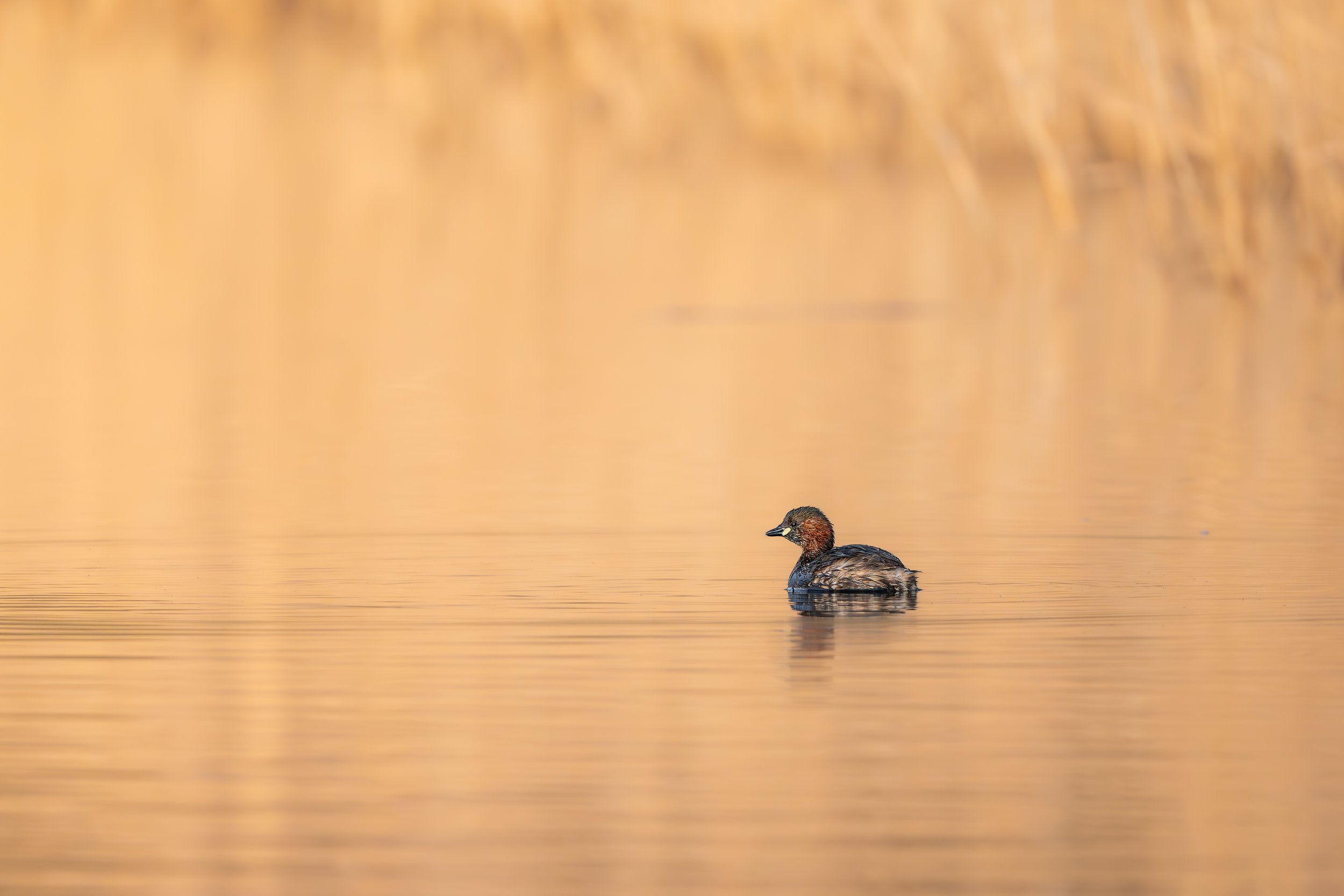
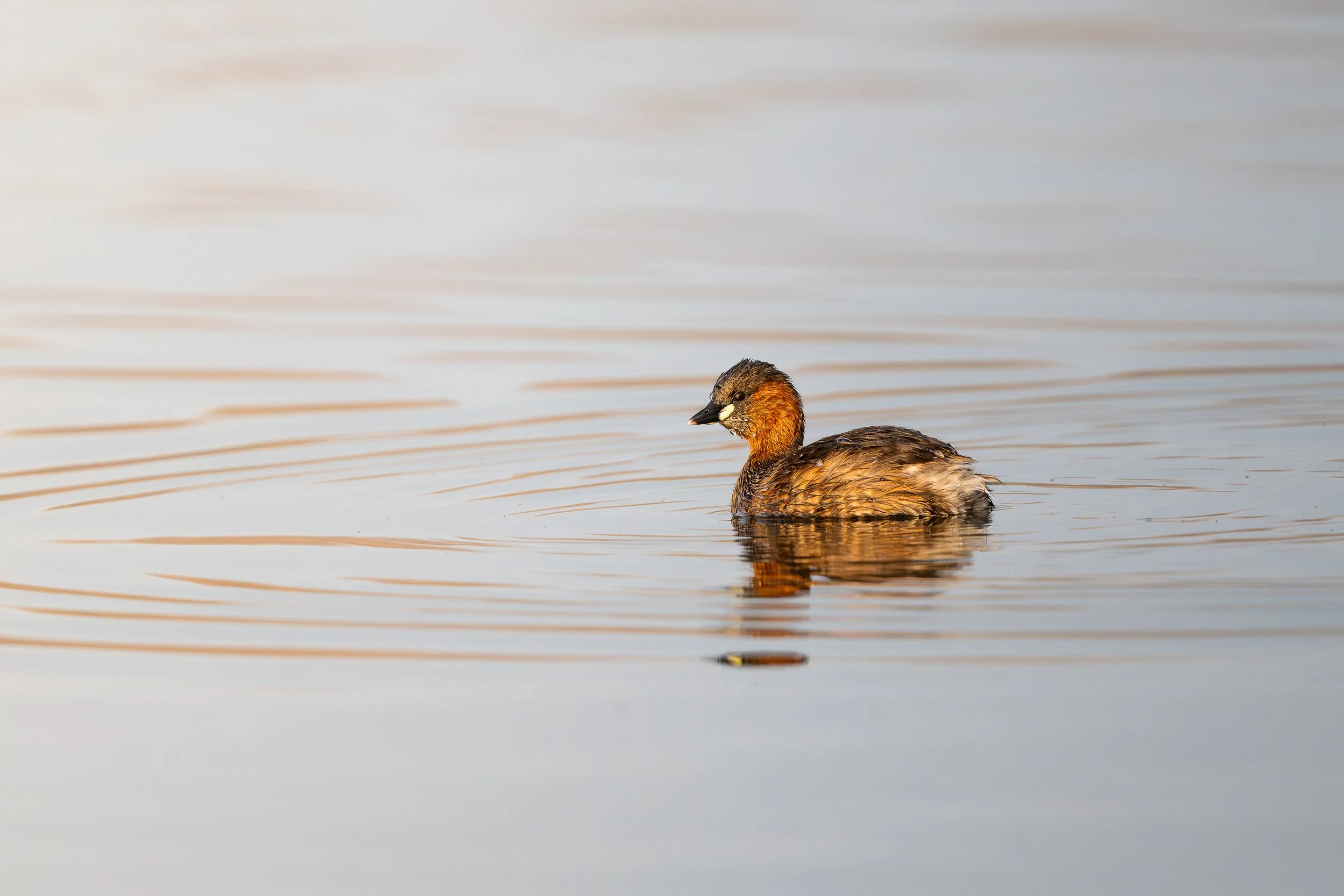
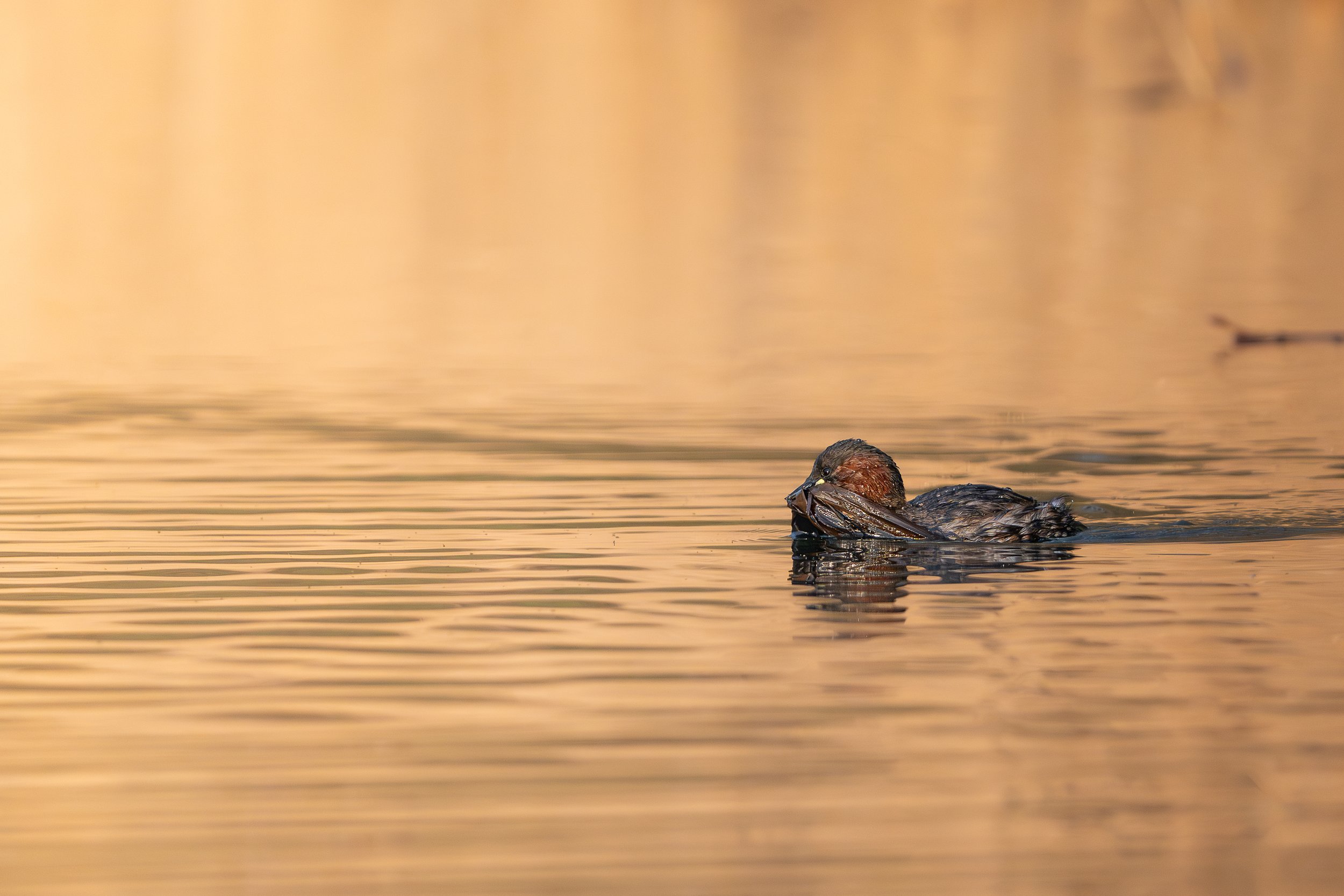
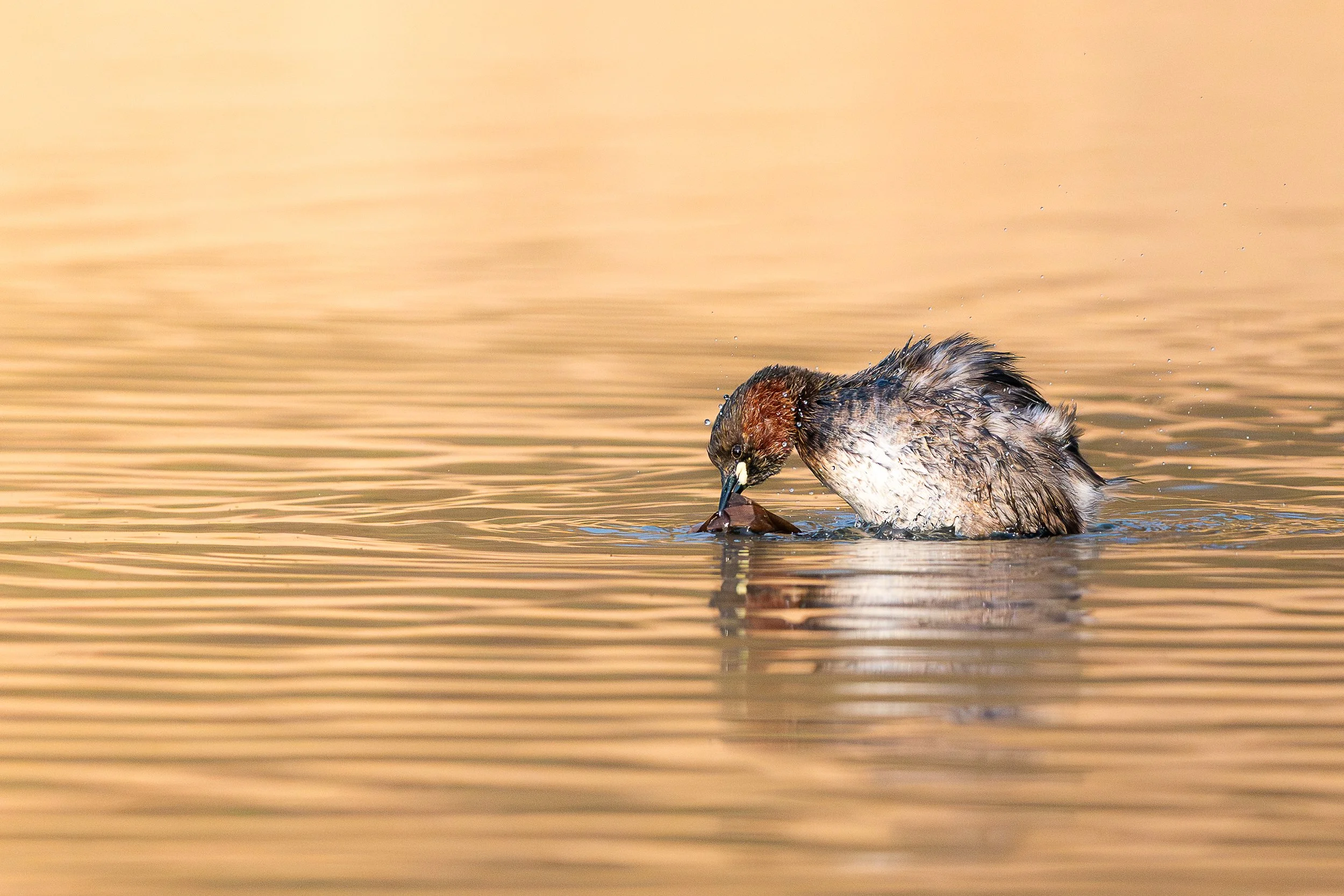
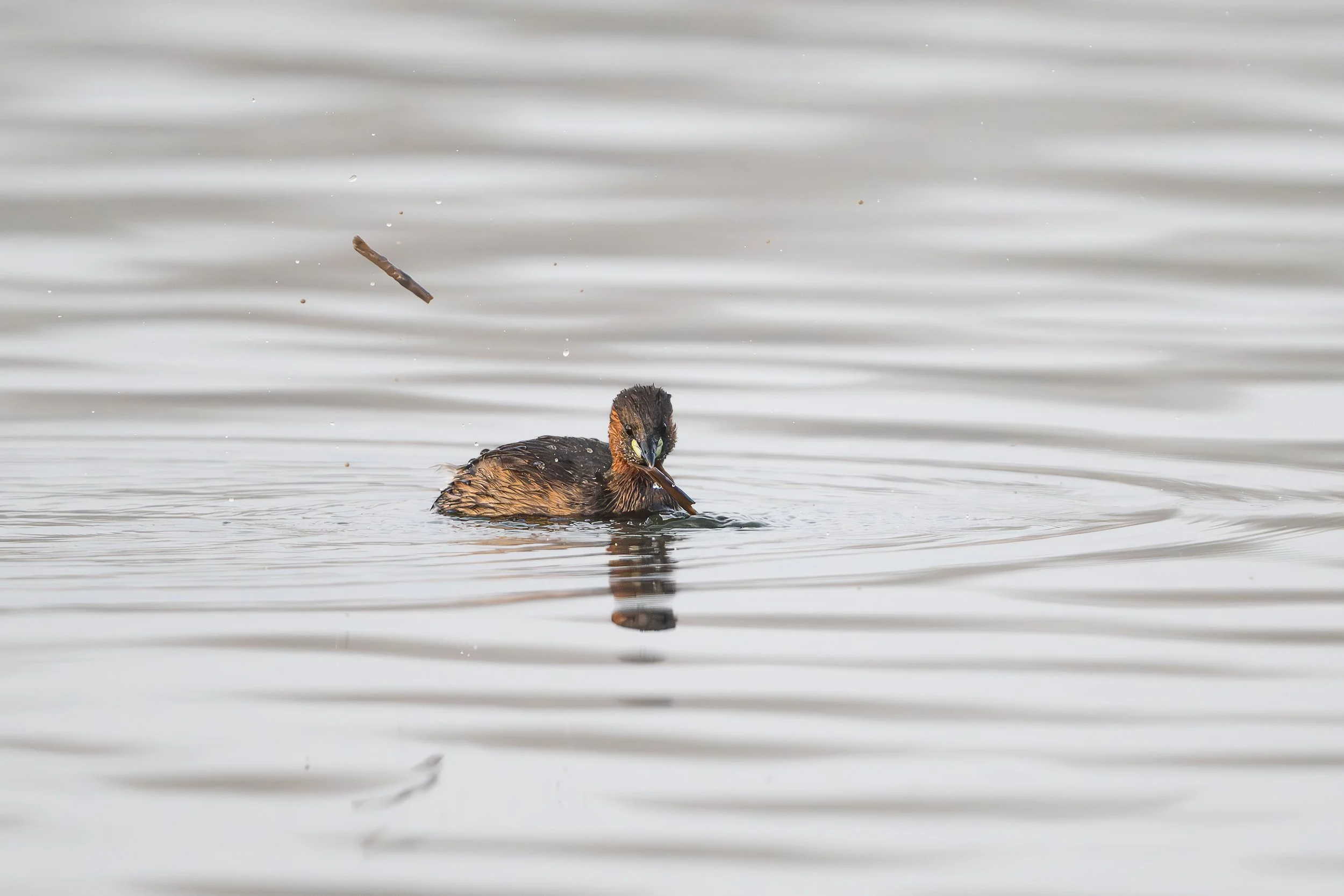
If the sky provides movement, the water provides drama. While scanning the reservoir that morning, I noticed a small disturbance in one particular area. A little grebe diving repeatedly in the same patch of water. This is always worth paying attention to. Wildlife tends to repeat behaviour when something interesting is happening beneath the surface.
So I stayed. Which, incidentally, is the entire secret of wildlife photography condensed into one sentence. Stay. The grebe disappeared. Seconds passed. Then a small brown head emerged again. With a leaf. Now, a grebe holding a leaf may not sound like the sort of moment that inspires epic nature documentaries. But what followed was one of the most entertaining performances I’ve seen on a reservoir. The grebe examined the leaf. Dunked it. Dragged it across the surface. Stared at it suspiciously. Attempted to eat it. Rejected it. Then immediately grabbed it again as if reconsidering the entire culinary situation.
For several minutes the bird wrestled with this leaf like a philosopher confronting an unsolved problem. It was chaotic. It was slightly ridiculous. And it was absolutely wonderful to watch. Because moments like this are the true reward of patience. They’re the small, unscripted stories that appear only when you allow a place enough time to unfold.
Building a Narrative Map
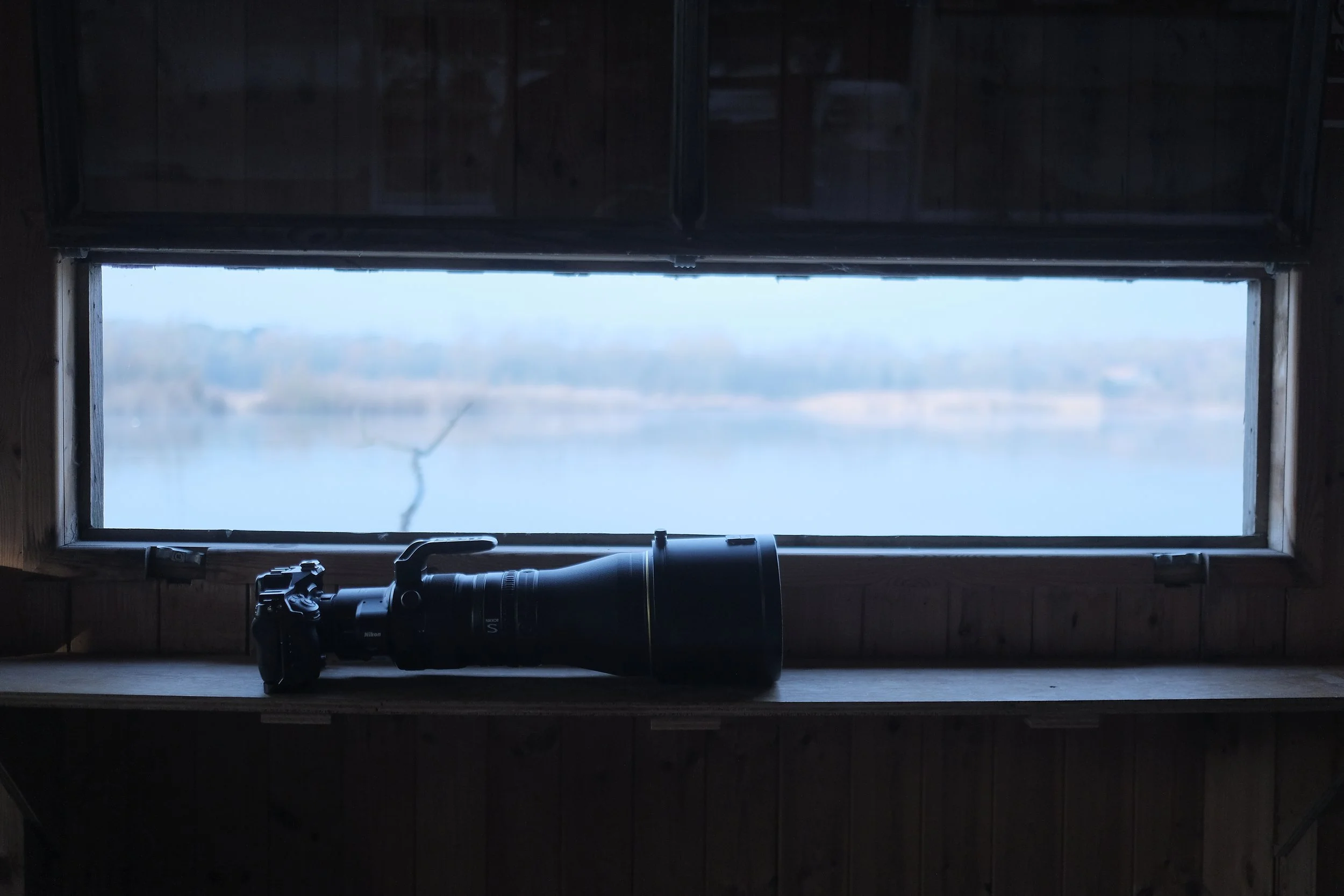
After several visits to Kempton, something interesting begins to happen. You stop seeing the reserve as a set of paths and hides. Instead, you begin building a mental map. Not the kind printed on the signboard at the entrance. A different kind.
A narrative map.
You begin noticing: Where ducks tend to cross the reservoirs. Which reed beds hide the most activity. Where the light becomes interesting early in the morning. Which quiet corners produce the strangest little behavioural moments. Once that map starts forming in your mind, the reserve changes. Photography becomes less about chasing birds and more about placing yourself where stories might appear.
Walking the Reserve Together
This way of approaching wildlife photography — learning how to read a place rather than simply photographing it — is exactly what we explore during the FeatherFrame field session at Kempton Nature Reserve on 4 April.
Instead of focusing only on camera settings, the session looks at something far more valuable: How to observe a landscape. How to recognise behavioural patterns. How to build your own narrative understanding of a reserve.
We’ll walk the paths together, sit in the hides, and explore how small details — flight lines, feeding areas, changes in light — shape the way wildlife moves through this place. Because once you learn to see those patterns, something wonderful happens. The reserve stops feeling random. And every visit begins to feel like opening the next chapter of a story.
If you’d like to join the Kempton field session, you can find the details here:
Date: Sunday 17 May 2026
Time: 7:30–11:30 AM
This workshop is designed for photographers who are already comfortable with their camera and want to deepen how they see and interpret wildlife behaviour.
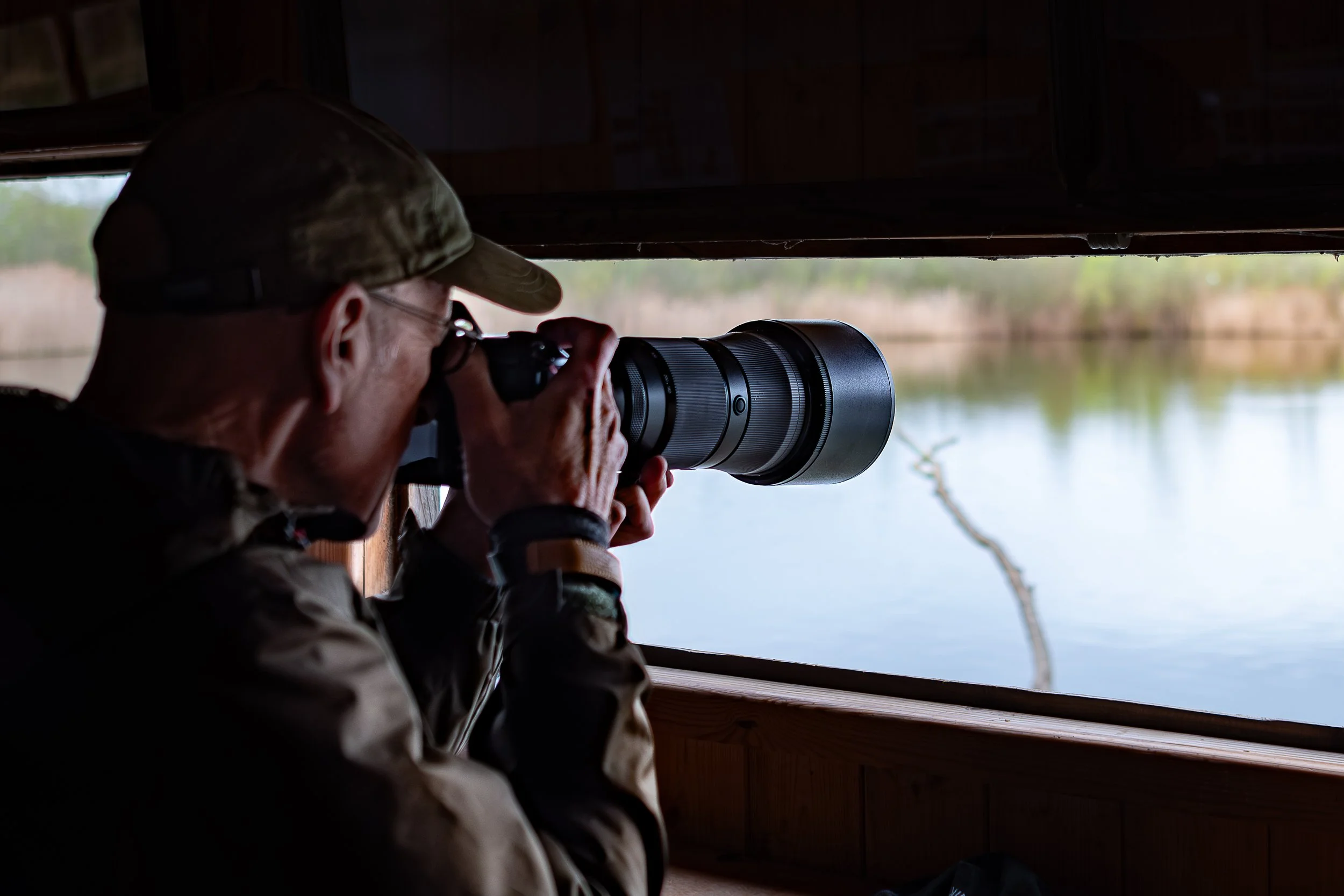
Please note that a telephoto lens of at least 400mm focal length is advised for this workshop!
Meeting point: Main entrance, Kempton Nature Reserve
Limited to 6 photographers.
